
Introduction: The Reign of the Perfect Gradient
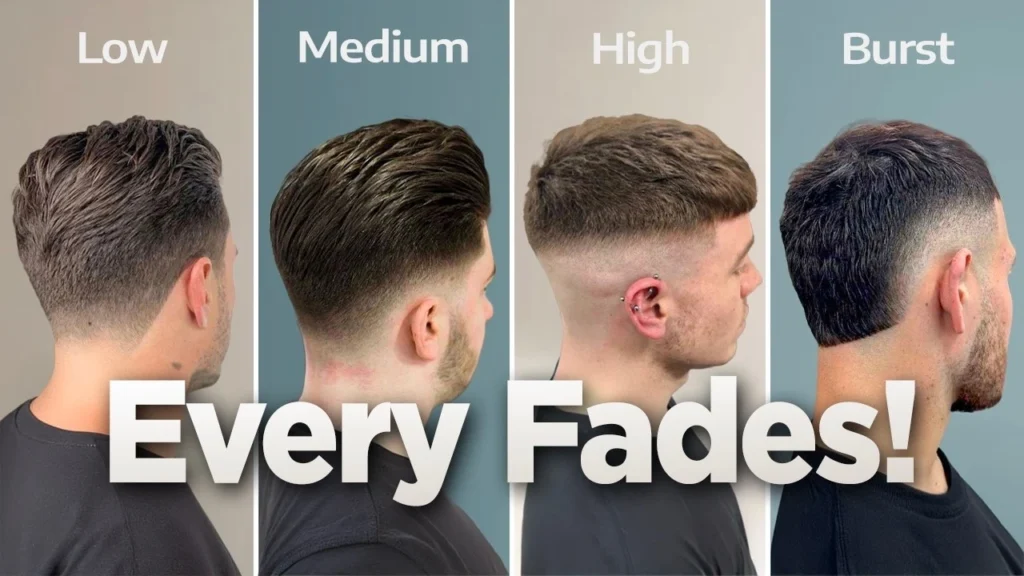
If there is one style that has completely dominated the landscape of men’s grooming over the last decade and continues to evolve in 2026, it is undeniably the fade. What was once a standard military regulation cut has transformed into a high-fashion architectural statement. Today, fade haircuts are the most requested service in barbershops globally, representing the pinnacle of precision, clean lines, and personal style. But as the variety of options expands, a new dilemma has emerged for the modern man: Should you choose a low, mid, or high fade?
A fade is more than just a short haircut; it is a masterpiece of “blurry” transitions. The goal is to create a seamless, shadow-like gradient where the hair invisibly transitions from bare skin to a longer length on top. In 2026, the standard for these cuts has reached an elite level. We are no longer satisfied with basic gradients; we demand “surgical precision.” Whether you are a corporate professional looking for a subtle taper fade or a trendsetter wanting a high-contrast skin fade, the choice you make will fundamentally alter your facial silhouette.
In this 1500-word masterclass, we will deconstruct the “Fade Spectrum.” We will compare the three primary heights—Low, Mid, and High—and explore how to match them to your specific hair texture and face shape. We will also dive into the technical side of the industry, exploring why fade haircuts are the primary revenue driver for modern grooming lounges. It is time to find the exact gradient that defines your persona.
Industry Insight: The ability to execute a flawless, “no-line” fade is what separates a standard barber from a Master Artist. Premium chains like The Salon Company are aggressively headhunting specialists who can master the art of the gradient. (Pro Tip: If you are a barber with a killer portfolio of fades, find the highest-paying roles on the Stylelink app today).
The Anatomy of a Fade: How it Works
To choose between different fade haircuts, you must first understand the technical mechanics. A fade is achieved by using electric clippers with varying guard lengths. The barber works in “zones,” cutting the hair extremely short at the bottom and progressively leaving more hair as they move up toward the parietal ridge (the widest part of the head).
The “blurriness” of a fade refers to the seamlessness of these transitions. If you can see a “step” or a visible line where one guard length meets another, the fade is technically flawed. A master barber uses a “flicking” motion of the wrist and micro-adjustments on the clipper lever to erase these lines, creating a shadow effect that mimics the natural contours of the skull.
1. The Low Fade: Subtlety and Sophistication
The low fade is the “Old Money” of fade haircuts. It is the most conservative and subtle choice in the spectrum. The transition from short to long begins very low on the head—usually just an inch or half an inch above the ears and the hairline at the nape of the neck.
Why Choose a Low Fade?
The low fade keeps the majority of the sides and back relatively full. This adds a sense of structure and weight to the sides of the face. It is the perfect choice for men who want a groomed look but find the exposed scalp of a high fade too aggressive for their workplace or personal style. It is also an excellent taper fade alternative for men with long hair who want to clean up the edges without losing the “flow.”
- Best For: Diamond and Oblong face shapes (adds necessary width).
- Vibe: Professional, understated, and refined.
- Maintenance: Moderate (Grows out gracefully).
2. The Mid Fade: The Versatile Goldilocks
As the name suggests, the mid fade hits the “sweet spot” right in the middle of the head. The transition starts approximately two inches above the ears, usually following the line of the temple. In mens haircuts 2026, this has become the absolute standard because it offers the perfect balance between the fullness of a low fade and the sharpness of a high fade.
Why Choose a Mid Fade?
The mid fade is a “silhouette corrector.” By taking the hair shorter at the widest part of the head (the parietal ridge), it slims down a rounder face and adds a square, masculine structure to the head shape. It is highly compatible with textured tops, quiffs, and pompadours. It is the “safe bet” that looks good on almost everyone.
- Best For: Round and Square face shapes.
- Vibe: Contemporary, sharp, and athletic.
- Maintenance: High (Needs a touch-up every 2 weeks).
3. The High Fade: Maximum Contrast
The high fade is a bold, high-contrast style where the transition begins high up on the head, usually around the temples or the corners of the forehead. This leaves a significant amount of exposed scalp on the sides and back, drawing all the visual focus to the hair on top.
Why Choose a High Fade?
If you want a look that commands attention and highlights a strong jawline, the high fade is the answer. It creates an aggressive, “V-shaped” silhouette that makes the wearer look taller and sharper. When combined with a skin fade (taking the bottom down to the bare scalp with a foil shaver), it creates the most dramatic of all fade haircuts. It is the go-to look for the “Modern Mohawk” or a heavy, textured “Broccoli” cut.
- Best For: Oval and Heart face shapes.
- Vibe: Edgy, bold, and high-fashion.
- Maintenance: Very High (Needs a touch-up every 7–10 days).
The Finish Variations: Skin vs. Shadow
Once you’ve chosen the height (Low, Mid, High), you must decide on the finish. This determines how much “skin” is showing.
- The Skin Fade (Bald Fade): The hair at the bottom is shaved completely down to the bare skin using a straight razor or a foil shaver. This provides the highest level of contrast and the “cleanest” look.
- The Shadow Fade: The hair at the shortest point is not taken to the skin, but left at a #0 or #1 guard length. This creates a “shadow” of hair, which is softer and more suitable for men with sensitive skin or those who prefer a less aggressive look.
Fade Haircuts and Face Shape Geometry
Choosing a fade is not just about fashion; it’s about correcting bone structure. A master barber at The Salon Company will use the fade to balance your features:
| Face Shape | Recommended Fade | The Goal |
|---|---|---|
| Round | High Skin Fade | Eliminates side bulk to elongate the face. |
| Oval | Any Fade | The most balanced shape; anything works. |
| Square | Mid Shadow Fade | Enhances the jawline without looking too “boxy.” |
| Oblong | Low Taper Fade | Preserves side width to avoid a “pencil-head” look. |
| Diamond | Low Shadow Fade | Softens sharp cheekbones. |
Barber Jobs: Why the Fade is the Industry’s Gold Mine
Are you a barber reading this? If you want to increase your revenue, you must master fade haircuts. Because these styles grow out so quickly, they create “High-Frequency Clients.” A long-hair client might visit once every two months, but a skin fade client needs a touch-up every 14 days. This guarantees a steady stream of re-bookings.
Here is how the Stylelink ecosystem can supercharge your career as a fade specialist:
- Find High-Ticket Gigs: Use the Stylelink App to find barber jobs at premium men’s lounges like The Salon Company. These establishments charge a premium for technical fading, leading to much higher commissions for you.
- Visual Portfolio: Use Stylelink’s Resume & Portfolio Builder. Words mean nothing in barbering. Upload macro-shots of your blurry skin fades. Showing your “before-and-after” blending skills is your ultimate negotiation tool for a higher salary.
- Master Recurring Revenue: If you are a shop owner, use Stylelink’s Salon Software (Lokaci Pro). Fades are the perfect service for “Subscription Models.” Use the software to sell a “Unlimited Fade Membership,” ensuring your clients never visit another barber and your revenue is guaranteed.
Maintenance: How to Keep the Gradient Blurry
A fade is a “high-performance” haircut. It looks incredible on day one, but by day ten, the hair at the bottom has grown just enough to blur the crispness. To keep your fade haircuts looking expensive, follow this maintenance protocol:
1. The 14-Day Rule
If you wear a mid or high skin fade, you must visit the salon every 2 weeks. Most premium salons like The Salon Company offer a “Taper Touch-up” service, which is cheaper and faster than a full haircut, just to clean up the edges.
2. Scalp Health
A fade exposes a lot of skin. If you have dandruff or a dry scalp, it will be visible to everyone. Use a scalp-care routine and apply a matte facial moisturizer to the faded area to keep the skin healthy and flake-free.
3. Edge-Up Mastery
The secret to fade haircuts looking sharp is the “Line-Up” (the edges around the temples and neck). Use a personal detail trimmer at home only to clean up the stray neck hairs between visits, but never touch the fade line yourself!
Conclusion: The Confidence of a Clean Cut
In 2026, fade haircuts are the definitive standard for the modern man. They offer a rare combination of discipline and style, allowing you to project a sharp, “put-together” image with minimal daily effort. Whether you choose the understated low taper fade or the high-impact high skin fade, you are investing in your personal brand.
Do not trust your gradient to an amateur. Experience the clinical precision of a master barber by booking your session at The Salon Company. And for the barbers who are architecting these sharp silhouettes, Stylelink is your definitive partner in scaling your career and becoming a top-tier industry professional. Your fade is your signature—make it flawless.
Frequently Asked Questions (FAQs)
Q1: Will a high fade work for a receding hairline?
Yes, remarkably well! A high fade reduces the contrast between the thin hair on top and the skin on the sides, making the recession much less noticeable. Pair it with a textured crop to cover the front corners.
Q2: Does a skin fade cause razor bumps?
It can if done improperly. Master barbers at The Salon Company use professional-grade foil shavers and post-shave antiseptic balms to ensure the skin remains smooth and irritation-free.
Q3: How do I choose between a low, mid, or high fade?
If you are unsure, always start with a mid fade. It is the most versatile option. From there, you can decide if you want to go higher for more impact or lower for a more conservative look in your next session.
#Fade haircuts #skin fade #taper fade #mens haircuts 2026 #the salon company #stylelink #barber jobs #salon software #lokaci pro


